Why Fall Is the Best Time to Schedule a Commercial Roof Inspection in Louisville
Why Commercial Roof Inspections Are Best In Fall
Louisville’s summer weather can be hard on a commercial roofing system. High temperatures, intense UV exposure, heavy rain and strong storms can damage roofing materials and drainage systems. By early fall, months of wear may have left behind problems that are easy to overlook from the ground.
Scheduling a commercial roof inspection in early fall gives owners and managers time to spot problems and fix potential issues before winter arrives. Proactive inspections and maintenance can help prevent leaks, protect the building and reduce long-term repair costs.
Perfect Timing…
Early fall offers a practical window between the extremes of summer and winter. Cooler temperatures create safer, more comfortable conditions for roof inspections and repairs. The mild weather also gives a commercial roofing contractor in Louisville more time to finish any needed work before freezing temperatures arrive.
This timing matters because winter can turn small roofing problems into major ones. Water can enter cracks, seams and gaps before freezing and expanding. Repeated freeze-thaw cycles may widen openings, weaken materials and increase the risk of leaks.
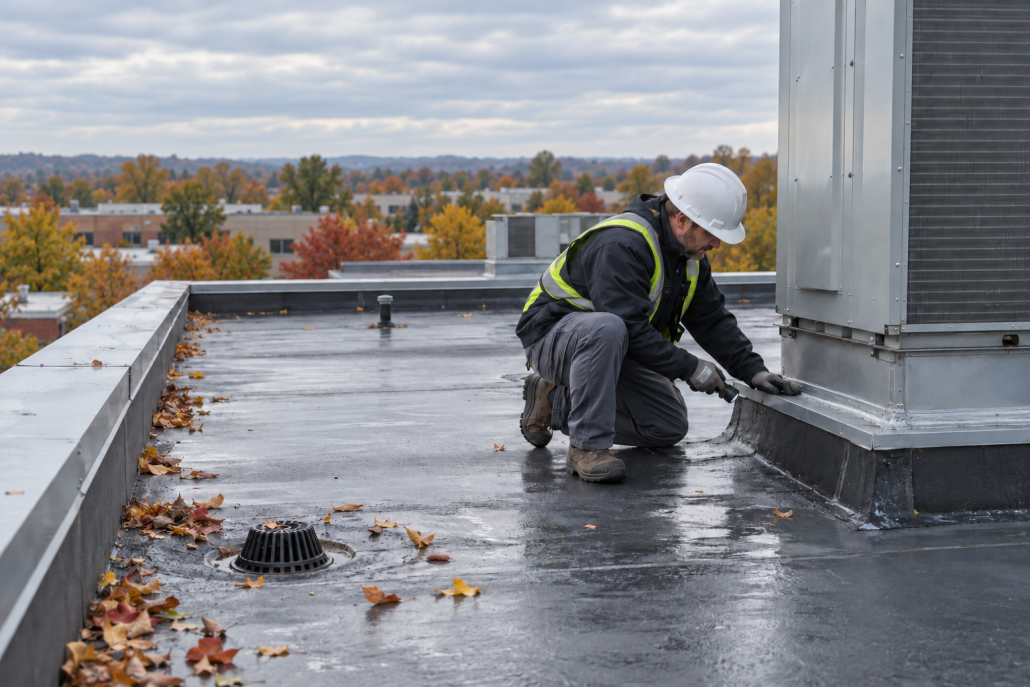
Falling leaves can also block drains, scuppers and gutters. When water cannot drain properly, it may collect on a low-slope or flat roof and put additional stress on the roofing system. An early fall inspection helps prepare the roof for these seasonal challenges.
How Does Summer Weather Affect a Commercial Roof?
Commercial roofs absorb intense heat throughout the summer. Repeated heating and cooling can cause roofing materials to expand and contract, placing stress on seams, flashing and fasteners. Prolonged UV exposure may also dry out some materials and cause cracking, blistering or surface deterioration.
Louisville’s summer storms create additional risks. High winds can loosen flashing, lift membrane edges and damage rooftop components. Hail can puncture or weaken roofing materials, while heavy rainfall can expose drainage problems and vulnerable areas.
These issues may not cause an immediate leak. However, they can leave the roof less prepared for cold weather. A fall inspection of your commercial roof can find hidden or new damage. It can catch problems before they lead to unexpected commercial roof repairs.
Property owners can read Highland Roofing’s article: “How Summer Heat Impacts Commercial Roofs in Louisville” to learn more about how summer heat causes seasonal wear on commercial roofs in Louisville.
What Does a Commercial Roof Inspection Include?
A professional inspection evaluates the condition of the entire roofing system rather than focusing only on visible leaks. Depending on the roof type, age and condition, the process may include:
- Examining the roof membrane for cracks, punctures, blisters and open seams
- Checking flashing around walls, curbs, vents and other penetrations
- Inspecting drains, gutters and scuppers for blockages or damage
- Looking for ponding water and signs of poor drainage
- Evaluating rooftop equipment and the areas surrounding it
- Checking for loose materials, damaged fasteners and worn sealants
- Looking for moisture intrusion or deterioration beneath the roof surface
- Documenting findings and recommending repairs or maintenance
A flat roof inspection needs extra care, as drainage problems may not show up inside the building. Damage to the roof membrane may also be hard to spot from indoors. Water can travel beneath roofing materials before appearing as a ceiling stain or active leak.
Highland Roofing’s Commercial Roof Survey & Inspections service gives property owners a clearer picture of current roof conditions and helps them plan the next steps.
What Problems Do Inspectors Commonly Find?
Commercial roof inspections often uncover small problems that have not yet affected the building’s interior. Common findings include loose flashing, separated seams, punctured membranes, clogged drains, deteriorated sealants and standing water.
Inspectors may also find damage around HVAC units, vents and other penetrations. These areas are common sources of leaks because they contain seams, edges and transitions that can weaken over time.
Property owners should request an inspection immediately if they notice:
- Water stains on ceilings or walls
- Active leaks or unexplained moisture
- Musty odors or signs of mold
- Standing water on the roof
- Loose, cracked or missing roofing materials
- Damaged flashing or roof edges
- Clogged drains or overflowing gutters
- A sudden increase in heating or cooling costs
Prompt attention can often limit the damage. With early detection, Highland Roofing’s Commercial Roof Repair & Service team can address identified problems before they affect insulation, decking, equipment or interior spaces.
How Often Should A Commercial Roof Be Inspected?
Most commercial roofing systems should receive a professional inspection at least twice a year—typically in the spring and fall. Building owners should also schedule an inspection after severe storms, hail, high winds or any event that may have damaged the roof.
The right schedule may vary based on the roof’s age, material, condition and warranty requirements. Buildings with older roofs, extensive rooftop equipment or a history of leaks may require more frequent evaluations.
Regular inspections form the foundation of effective commercial roof maintenance. They create a documented history of the roof’s condition and help property managers plan maintenance, repairs and eventual commercial roof replacement.
Can An Inspection Help Prevent Expensive Repairs?
Yes. A roof inspection can identify minor defects before water enters the building or damages the roof assembly. Repairing a loose seam or worn sealant usually costs far less than fixing soaked insulation or structural damage. It also costs less than dealing with mold or business downtime from a major leak.
A consistent preventative roof maintenance program also helps extend roof life. Cleaning drainage systems, resealing weak areas, and fixing small damage can reduce roof stress. This helps keep the roof performing well.
Highland Roofing’s preventative maintenance services help businesses move from reactive repairs to planned care. This approach gives owners greater control over maintenance budgets and lowers the risk of emergency service calls.
Choose An Experienced Louisville Commercial Roofing Partner
Highland Roofing has served businesses with dependable commercial roofing in Louisville, KY, for generations. The team understands the region’s heat, storms, heavy rain, falling leaves and winter freeze-thaw cycles.
We support a wide range of commercial roofing systems. Its complete commercial roofing services help property owners protect their buildings and make informed decisions about their roofing investments.
Do not wait for a winter leak to reveal a problem. Schedule a professional commercial roof inspection in Louisville before colder weather arrives. An early inspection can uncover minor issues, support timely repairs and help your commercial roof enter winter ready to perform.