How Freeze/Thaw Cycles Impact Your Roof
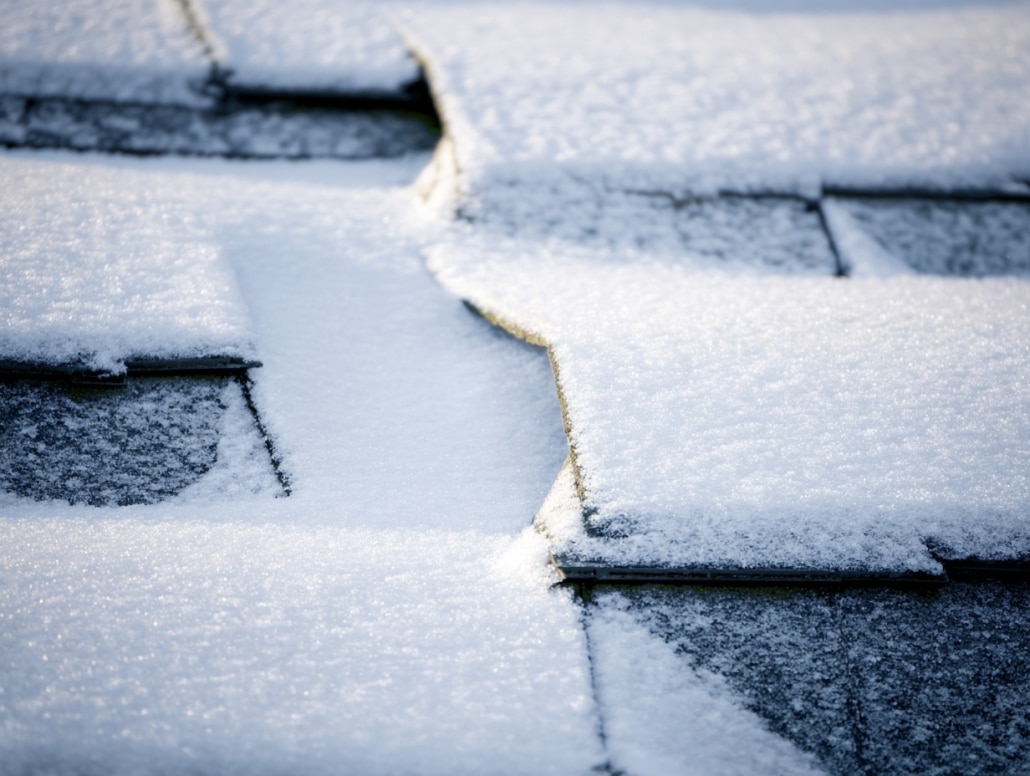
When It Comes To Your Roof, Ice Isn’t Nice.
You’ve probably heard the saying: “If you don’t like the weather today, just wait until tomorrow.” That feels especially true in Louisville and the Kentuckiana area. One day it’s 70 and sunny. The next day, we’re all scrambling to get milk, bread and extra propane tanks to survive a once-in-a-generation ice storm.
This ongoing freeze/thaw cycle causes not only frustration, hazardous road conditions and general chaos across town – but it can also be doing serious damage to something you might not really know about: your roof.
Trouble Up Above
The continual loop of moisture freezing, expanding and thawing can cause a host of issues on your roof, including:
- Shingles cracking, lifting, or losing granules
- Loosening of flashing and seals around chimneys, vents, and skylights
- Gutters and roof edges forming ice dams
- Flat or low-slope roofs holding frozen water
On top of regular wear and tear, these issues quickly lead to leaks, structural damage and a whole lot of headaches.
Watch For The Warning Signs
So how do you know if your roof is being damaged by the Freeze/Thaw cycle? Here are some things to look for.
- Water stains on interior ceilings, peeling paint on walls or even damp smells inside your home
- Ice buildup along roof edges
- Missing or curling shingles
- Gutters that appear to be sagging, especially where there is a current or recent buildup of ice.
- And, of course, active water leaks /or obvious structural damage or strain during freezing temperatures and ice/snow events.
Waiting Can Make It Worse
If you experience any of these, you might be tempted to wait it out until Spring before getting help or tackling repairs yourself.
But while you’re waiting, things can easily get worse.
Small structural strains can become major structural emergencies. Small water stains and leaks can grow larger and larger. Minor damage to shingles can lead to worse damage and reduced integrity.
So while no one wants to have to deal with roof issues – at any time of year – the longer you wait in colder months, the more damage that can occur and the more expensive the repair will be.
Older Roofs. Higher Risk.
While the freeze/thaw cycles can put new roofs to the test, older roofs are even more susceptible to damage during freezing weather.
As roofing materials age, they become less flexible and resistant to the continual contracting and expanding that takes place. Which means a greater chance for them to crack, break and even fall off.
And, with older roofs, there’s typically more wear and tear than you find on newer roofs – which the cold cycle can make significantly worse.
That’s why it’s best to schedule routine inspections for older homes, or even newer homes with older roofs. A little bit of prevention now can save you a lot of hassle – and money – down the road.
So… Now What?
First, don’t worry. You may experience no problems at all. But it never hurts to be aware of the potential.
Second, make sure to keep an eye out for the warning signs listed above. Early detection and maintenance can prevent leaks and structural damage.
Third, let Highland Roofing do the heavy lifting with a winter roof inspection. We’ll check out your entire roofing system – shingles, gutters, flashing and more – and provide a custom report covering any damage, trouble spots and recommendations for repair.
Want To Do It Yourself? Follow This Checklist To Stay Safe.
Before attempting to tackle any winter roof issues, ask yourself the following questions:
- Can I fix this without getting on the roof?
- Is this cosmetic, or is water involved?
- Would a mistake make things worse before spring?
If water is involved, height is involved, or you’re simply unsure, don’t take a chance. Just reach out to Highland Roofing and we’ll take great care of your roof – and of you.