How Summer Storms Put Commercial Roofing Systems at Risk in Louisville
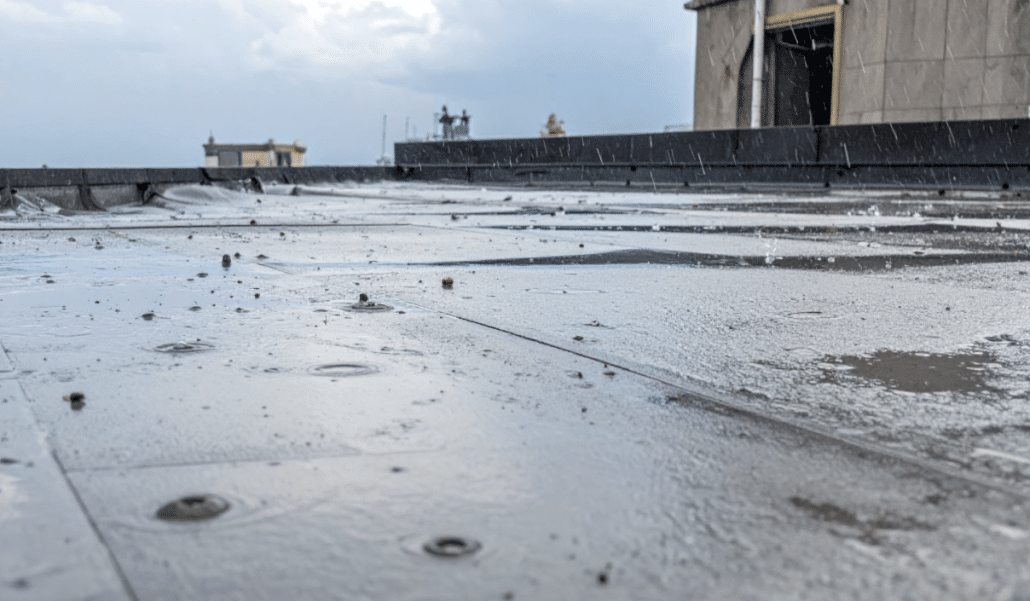
Summer storms are common across the Louisville area. High winds, heavy rain, hail, and frequent lightning can all take a toll on commercial roofing systems. While some storm damage is obvious, many problems develop beneath the surface and go unnoticed until a leak appears inside the building.
Scheduling a roof inspection after severe weather helps identify hidden damage early, protecting your investment and reducing the risk of costly repairs.
How High Winds Can Damage Roofing Systems
Strong winds place significant stress on flat and low-slope roofing systems. Gusts can lift roof membranes, loosen flashing, and pull at seams around roof edges and rooftop penetrations.
Wind damage often includes:
- Lifted membrane seams
- Damaged edge metal or coping
- Loose flashing around HVAC equipment and vents
- Debris impact from nearby trees or loose materials
Even if everything appears intact from the ground, wind may have weakened the roofing assembly enough to allow water infiltration during the next rainfall.
Why Heavy Rain and Ponding Water Create Bigger Problems
Louisville’s summer thunderstorms often produce large amounts of rain in a short period of time. Flat roof systems depend on properly functioning drains and scuppers to move water away efficiently.
When drains become clogged with leaves, branches, or storm debris, water begins to pond on the roof surface. Standing water increases stress on the membrane and can eventually lead to:
- Membrane deterioration
- Seam failure
- Moisture infiltration beneath the roofing assembly
- Additional structural weight on the building
Regular preventative roof maintenance helps keep drainage systems clear and minimizes the risk of ponding water after heavy storms.
Hail Damage Isn’t Always Easy to See
Hail can damage TPO, PVC, EPDM, and modified bitumen roofing systems even when there are no visible leaks. Depending on the roofing material and hail size, impacts may weaken seams, puncture membranes, or damage protective coatings without immediately exposing the building to water.
Common signs of hail damage include:
- Small punctures or tears in the membrane
- Dented flashing or rooftop equipment
- Surface bruising or granule loss on modified bitumen systems
- Damage around roof penetrations
Because hail damage is often difficult to identify from the ground, a professional roof inspection is the best way to determine whether repairs are needed.
Signs Your Roofing System May Have Storm Damage
Building owners and facility managers should watch for these warning signs after a severe storm:
- Water stains on ceilings or walls
- Loose flashing or metal trim
- Debris collecting on the roof
- Ponding water that remains more than 48 hours after rainfall
- Lifted membrane edges or visible seam separation
- Pieces of roofing material found around the property
If you notice any of these issues, schedule a professional roof inspection promptly. Early detection prevents small problems from becoming expensive repairs.
Why a Post-Storm Inspection Is Worth It
Many roofing problems are not immediately visible. Water can enter beneath the membrane and travel significant distances before appearing inside the building. By the time an interior leak develops, insulation, decking, and structural components may already have been affected.
A professional post-storm inspection allows roofing specialists to:
- Identify hidden storm damage
- Document issues for potential insurance claims
- Recommend repairs before damage spreads
- Extend the service life of the existing roofing system
- Reduce the likelihood of emergency repairs
Routine inspections following severe weather help property owners stay ahead of expensive repairs while protecting tenants, employees, and business operations.
Why Prompt Repairs Protect Your Investment
Storm damage rarely improves on its own. A small puncture, loose flashing, or lifted seam can allow water to penetrate beneath the roofing membrane. Over time, moisture can saturate insulation, weaken the roof deck, reduce energy efficiency, and create conditions for mold growth.
Addressing damage quickly often means a simple repair rather than a much larger restoration project or premature roof replacement. Investing in timely repairs helps maximize the lifespan of your roofing system while minimizing unexpected expenses.
Frequently Asked Questions
Should I have my roof inspected after every major storm?
Yes. If your building experiences high winds, hail, or heavy rainfall, a professional inspection can identify hidden damage before it develops into leaks or structural problems.
Can a roofing system be damaged without leaking?
Absolutely. Wind, hail, and heavy rain can weaken roofing materials, loosen flashing, or separate seams without creating an immediate leak. Damage may not become noticeable until the next storm.
How soon should a roof inspection be scheduled after severe weather?
Ideally, schedule an inspection within a few days after the storm, especially if hail, strong winds, or ponding water occurred. Early inspections allow minor repairs to be completed before additional weather causes further damage.
Will insurance cover storm damage?
Coverage depends on your policy and the cause of the damage. A professional inspection provides documentation that may help support an insurance claim if storm-related damage is found.
Highland Roofing Is Your Storm Damage Partner
Summer weather in Louisville can change quickly, and even a single storm can shorten the life of a roofing system if damage goes unnoticed. Highland Roofing provides professional inspections, preventative maintenance, and repair services for TPO, PVC, EPDM, modified bitumen, flat roofs, and other low-slope roofing systems.
Our experienced team evaluates roof membranes, flashing, drainage systems, rooftop penetrations, and rooftop equipment for signs of storm damage. When repairs are needed, we address issues promptly to help protect your building and extend the life of your roofing investment.
To learn more about our services, visit our Commercial Roofing, Commercial Roof Repair pages.
Schedule a post-storm commercial roof inspection today to catch hidden damage before it becomes an expensive repair.