Commercial Roof Inspections Demand Experience
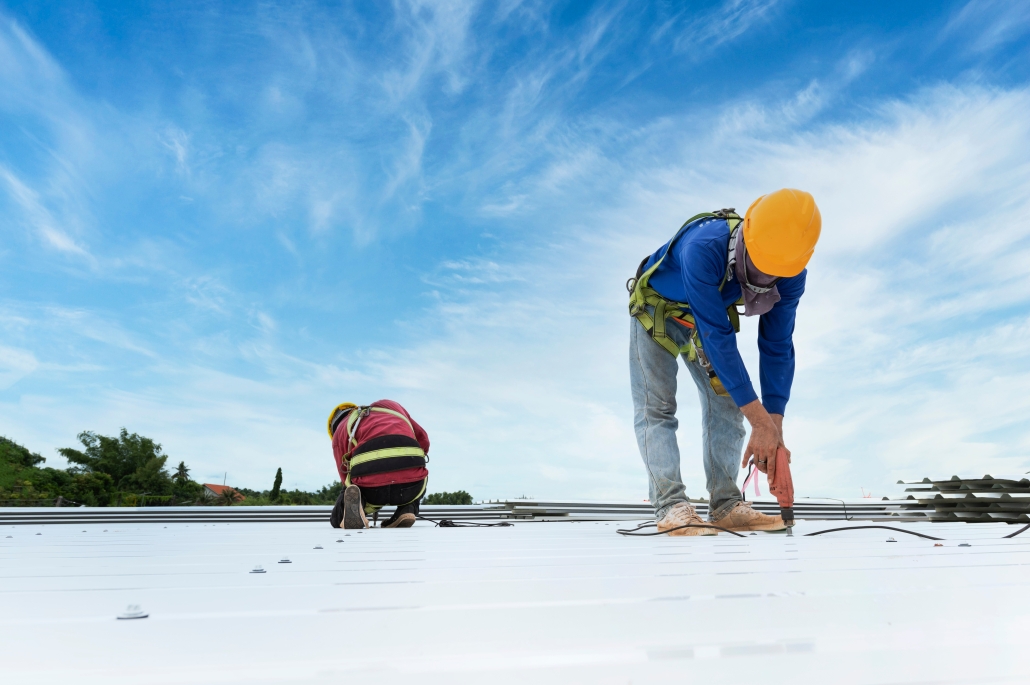
Commercial roofs are critical infrastructure. They shield inventory, equipment, employees, and daily operations from weather and environmental stress. Unlike residential roofs, commercial systems are typically larger, flatter, and incorporate rooftop equipment and complex terminations.
Many problems develop slowly. They stay hidden in membranes, seams, flashings, or insulation layers. They often appear only after water gets in and damages the interior.
Regular roof inspections by skilled professionals help building owners spot small problems early and prevent major incidents.
Commercial Roofs Are Complex Systems
Commercial roofing is not one-size-fits-all. Common systems you’ll encounter include:
- TPO (Thermoplastic Polyolefin): a single-ply, heat-weldable membrane valued for high reflectivity and easy repair. It can be sensitive to poor welds, roof traffic and stress at flashings.
- EPDM (Ethylene Propylene Diene Monomer) is a rubber membrane with good stretch.
Seams and adhesive details are common failure points.
- Built-Up Roofing (BUR) uses multiple felt and asphalt layers for durability and backup. Flashing issues and ponding water can speed up wear.
- Modified Bitumen: polymer reinforced sheets applied with heat or cold adhesives; flashings and laps require careful detail work.
- Metal roofing systems: standing seam or panel systems that work well with proper fastening and expansion details. They can suffer from fastener corrosion, seam leaks and leaks around roof penetrations.
Each material has its own aging characteristics, failure modes, and inspection needs. Flat roof inspection techniques differ from sloped metal roof assessments. An inspector must evaluate membrane condition, seam integrity, flashing terminations, insulation performance, roof penetrations, and rooftop equipment interfaces to deliver an accurate condition assessment.
Problems That Are Easy to Miss
Many commercial roof failures begin as small issues. These issues are easy to miss without trained eyes and focused inspection steps:
- Membrane wear can come from UV damage, hail, abrasion, or thinning in high-traffic areas. Visual signs may be small, but they matter for estimating remaining life.
- Flashing failures: perimeters, curbs, parapets, and penetration flashings often fail because of movement.
- They can also fail because of poor installation or loss of adhesion.
- Water entry can stay hidden for long periods of time and can move laterally through the system.
- Seam separation: Heat-welded and adhesive seams can form small gaps. These gaps can worsen with thermal cycling and wind uplift forces.
- Drainage problems: blocked or small drains, clogged scuppers, and poor slope design cause slow drainage and raise hydrostatic load.
- Early ponding indicators include slight depressions, soft substrate, or compressed insulation. These warning signs appear before chronic ponding starts and speeds up membrane breakdown.
- Condensation and insulation failure: loss of R-value or condensation in the roof assembly may lead to leaks. It can also cause mold growth and interior damage.
Small defects can build up. A small seam gap and poor drainage can cause membrane soaking, insulation damage, wood rot, and ceiling collapse.
Properly trained inspectors like Highland Roofing use a combination of visual checks, moisture scanning, infrared thermography, and core sampling to accurately measure problems and choose the best corrective action.
Why Periodic Inspections Matter
Periodic inspections are an investment in asset protection and predictable lifecycle management:
- Early identification: inspectors can detect small defects and fatigue before they escalate to leaks or structural issues.
- Interior damage prevention: catching and repairing roof penetrations early prevents water ingress that damages finishes, electrical systems, inventory, and sensitive equipment.
- Extending service life: timely repairs and targeted maintenance reduce the speed of deterioration, deferring capital replacement costs.
- Maintenance planning and budgeting: documented condition reports with prioritized recommendations allow building owners to schedule work proactively and allocate capital expenditures across fiscal cycles.
- Warranty and insurance compliance: many manufacturer warranties and insurance policies require documented maintenance and periodic inspections to remain valid.
Best practice is to inspect flat commercial roofs at least twice a year, in the spring and fall.
You should also schedule an inspection after severe storms, HVAC upgrades, or heavy rooftop traffic.
The Value of Experienced Craftsmanship
Technical knowledge and field experience make the difference between a superficial inspection and a comprehensive diagnostic assessment. Highland Roofing’s long-standing presence in Louisville and the surrounding region provides several advantages:
- Local experience: Over 135 years in Louisville brings deep knowledge of local weather stress.
- This includes freeze-thaw cycles, high humidity, summer heat, storm patterns and other factors that can affect roof performance.
- System-specific expertise: Highland Roofing technicians can assess TPO, EPDM, PVC, BUR, modified bitumen, and metal systems. They can spot wear patterns and installation defects unique to each material.
- Attention to detail: thorough inspections include perimeters, curbs, penetrations, rooftop equipment, drains, and below-surface condition checks when indicated.
- Quality materials and techniques: recommendations emphasize durable materials and industry-best repair methods designed for long-term performance rather than temporary patching.
- Documentation and transparency: Highland Roofing provides clear inspection reports with photos, prioritized recommendations, lifecycle estimates, and cost projections to support decision-making.
Experienced craftsmanship reduces the likelihood of repeated repairs, protects warranty coverage, and optimizes total cost of ownership for commercial roofing in Louisville, Kentucky.
Preventative Maintenance Saves Money
Preventative maintenance is a cost-effective strategy. Addressing manageable issues early produces measurable savings:
- Reduce emergency repairs: planned repairs avoid the premium costs and business disruption associated with emergency leak response.
- Protect assets: preserving roof integrity protects inventory, electronics, HVAC systems, and tenant spaces from costly water damage.
- Maximize ROI: routine maintenance extends useful roof life and delays the capital expenditure of a full replacement.
- Improve safety and compliance: well-maintained roofs reduce hazards for rooftop workers and help ensure regulatory and warranty compliance.
A strong maintenance program includes regular drain and scupper cleaning. It also includes inspections of seams and flashing.
It covers repairs to the membrane surface and seasonal condition reports. It may also include targeted coating on compatible systems.
Conclusion
Commercial roofs are engineered systems that require experienced professionals to evaluate, maintain and repair effectively. Routine commercial roof inspections with an experienced provider, especially for flat roofs, can find small defects early.
They support proactive maintenance and budgeting.
They help prevent interior damage.
They also extend the life of the roofing system.
For building owners and property managers in Louisville, working with an experienced contractor like Highland Roofing helps.
You get local knowledge, skilled craftsmanship, and high-quality materials for every inspection and repair.
So, protect your property with a professional commercial roof inspection.
Contact Highland Roofing to schedule a commercial roofing evaluation or a flat roof inspection. You’ll get a detailed report, practical recommendations, and a plan to keep your roof performing for years to come.